
While we, in higher education, currently obsess about AI, I’d like to bring us back to the extraordinary pedagogic power of the physical, tangible object and on the power of objects to engage the imagination, to generate stories and lines of enquiry, to provoke philosophical, political, ethical debates, and to provide learning experiences that really ‘stick’.
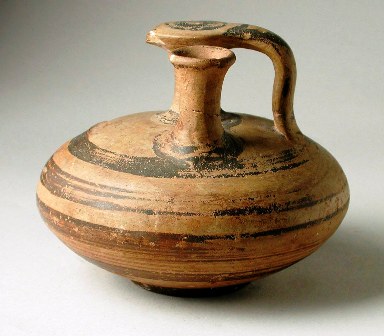
I still recall clearly the ‘History of Decoration’ seminars from my art student days when ‘Simi’ (Ms. Simeon the lecturer) would enliven her lectures on, say, Ancient Egypt, by taking a vase or piece of jewellery or some other artefact out of the cardboard box she always brought. She would casually hand the object to someone to examine and then pass around the room with the words ‘Do try to be careful, dears, that’s three and half thousand years’ old’. This would be repeated every session, whether the topic was Ancient Rome, Medieval Europe or Tudor England. I only realised what we had been passing round when I heard that, on her death , Simi’s large collection of “just something to look at while I’m talking” had been bequeathed to and enthusiastically accepted by the V&A museum.
What is also clear is that ‘object lessons’ are not just the preserve of the creative arts community. Every discipline clearly has its associated artefacts which can be used not only to enhance the teaching of an ‘academic’ subject, but also to enable learning that engages, amazes, provokes, exhilarates, takes risk, liberates.
Objects, importantly, enable us to slow down time: to observe, to really look, to touch, to feel, to explore. The artist Marina Abramovich – one of whose concerns is the fact that we don’t stop to really look any more – has a number of exercises she uses to achieve the same slowing down.
In one institution I established a Wednesday late afternoon ‘option’: a traditional life-drawing class open to any student across the institution. All the students that participated in that quiet, contemplative two hours, from a number of different disciplines and amidst an extraordinarily hectic timetable, reported that they understood that it wasn’t about being able to draw. It was about having the time and space to slow down and really observe not only the ‘object’ (usually another student) but also themselves and in Paul Klee’s famous phrase ‘to take a line for a walk’.
The late Ken Robinson, in his now famous TED Talk on creativity and education, joked about academics generally seeing their bodies as a form of transportation to get them to meetings. He stressed the importance of mind and body, the intellectual and the emotional, the psychological and the physiological. Objects – in all their glorious variety – and our close interactions with them, provide a means to engage powerfully in deep, meaningful learning experiences. Objects both inhabit space and create space. We just need the space, the time and, importantly, the confidence to engage in our own object lessons.