
During the Covid pandemic Ciel Associates was commissioned by a mid-size university in the UK (our client was the university’s Deputy Vice Chancellor) to undertake a consultancy the outcome of which, according to the original brief, would ensure that ‘Faculty Leadership roles and posts had role/job descriptions which are up to date and fit for purpose, and that the overall leadership and management organisational structure in Faculties is appropriate and effective to deliver the University Strategy and Faculty plans.’ It was also made clear that ‘This is not a restructure proposal or a staff reduction proposal.’
In the briefing document the question was asked: ‘Is the line of responsibility, leadership and management in senior faculty positions to deliver the university strategy clear? Are roles clearly aligned to the strategy and to each other?.
As a result of the initial discussions about the project, and as it was during Covid, we decided that the consultancy would have to be undertaken remotely with any interviews and discussions occurring online. After some initial meetings with the Deputy Vice Chancellor and several of the senior academic staff involved we put forward a proposal and action plan which was accepted. We felt it was essential that we gained a strong sense of the organisational and affective landscape we were entering and we asked for and were supplied with organisational maps and staffing structures.
The focus of the consultancy would be on the roles and workloads of academic subject leaders and deputy leaders in recognition of the significant levels of dissatisfaction that had been raised by them. It was also recognised that the focus and starting point was the student journey and experience and how all the various component parts of the university connected with that journey and experience.
We decided to undertake the consultancy in two parts: an online survey for the academics leaders and deputy leaders followed by a series of in-depth interviews with a representative group and other relevant stakeholders in the consultancy. We also undertook some research into workload models and how those models operated in other universities.
The survey, consisted of a number of ‘tick box’ questions most of which were accompanied by an open, no-limit, free-text comment box that invited respondents to explain their ‘tick box’ response. The survey was distributed to c. 60 individuals across the various faculties. We received 48 fully completed responses; an excellent response rate and reflective of the depth of feeling. The free text responses produced c. 46,000 words, many of which contained very full and detailed comments, some of them deeply personal, as we had guaranteed confidentiality and anonymity in any reporting of the findings.
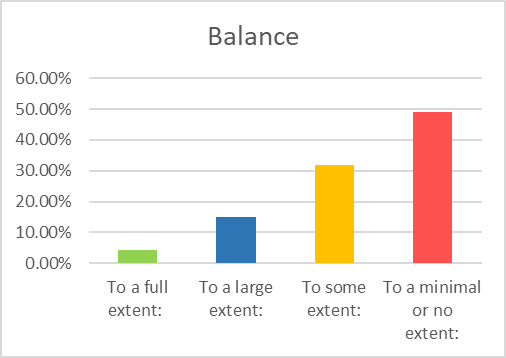
Question: To what extent is there a reasonable/equitable balance between the various activities and responsibilities of your job/role (i.e. leadership, management, administration, teaching, research)?
The responses to the survey were so comprehensive and provided such a rich source of data that it was decided that the plan to interview a number of the respondents was unnecessary. We did, however, undertake in-depth, hour-long interviews with seven Faculty Managers and Faculty Administrators (who were not included in the original survey) in order obtain their views on some of the questions in the survey and to increase our understanding, from their perspective, of how the various component parts of the university operated. A wider, cross-university investigation was beyond the scope of the consultancy. The interviews with the Faculty Managers and Administrators revealed a significant degree of agreement with the views of the academic staff.
Previous experience of undertaking in-depth qualitative research was very useful in undertaking the intensive work involved in analysing and coding all the responses in order to arrive at a reasonable and coherent set of headings (see table below) from which we could formulate our findings and recommendations.
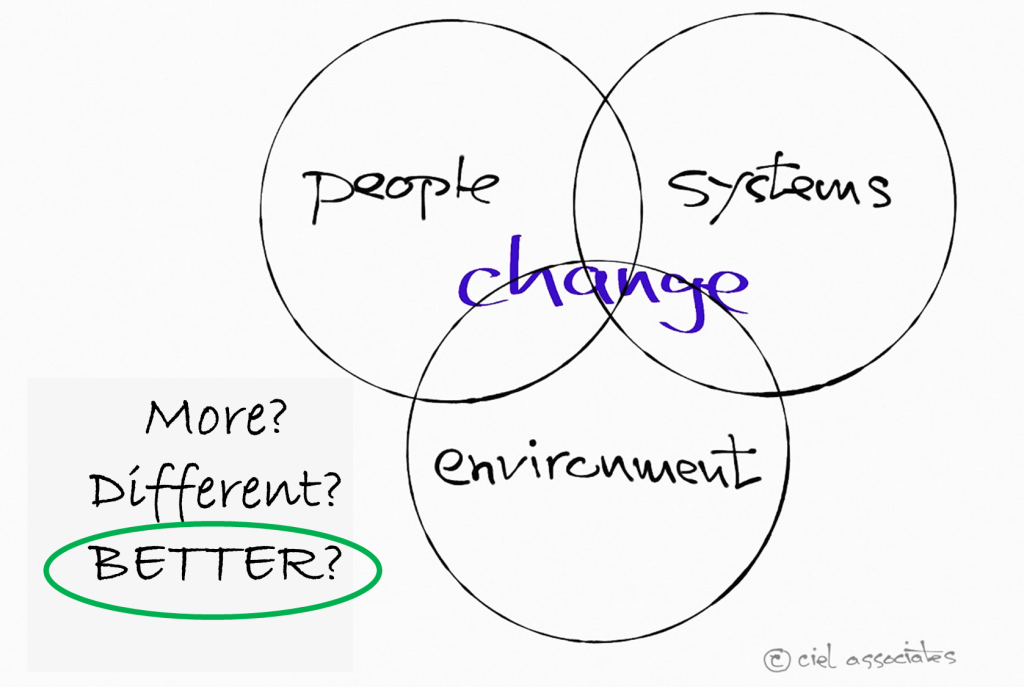
We approached the problem using the framework that informs much of our work. It enables us to explore the potential and practicalities of change through three ‘lenses’: People, Systems, Environment, always asking and seeking ‘What will make this better?’
The outcome of the consultancy was a 73-page report containing an Executive Summary, detailed findings from the survey with extensive, carefully anonymized quotes from the open text responses, conclusions and series of recommendations.
| PEOPLE | SYSTEMS | ENVIRONMENT |
| Autonomy and empowerment Balance Health and well-being Satisfaction/Dissatisfaction Time | Administration, systems and processes Centralisation / De-centralisation Job/role descriptors Workload allocation model | Culture Values |
The report and its findings and recommendations were accepted and a substantial amount of money and time was allocated to implementing those recommendations.
A year later we were invited to observe a meeting, chaired by the Deputy Vice Chancellor, at which the changes made were reviewed positively by the staff involved. The Deputy Vice Chancellor commented in an email to us:
“I would like to thank you for all your work, meeting staff, developing the survey and reporting the results. It has moved us forwards a lot and I hope we will see immediate benefits to the staff involved, as well as hopefully longer-term whole institution benefits...The implementation won’t be a magic full solution but it will make a lot of difference. The work you undertook for us underpinned the outcome and without that hard evidence of a problem, we would not have been able to prioritise this investment.”
© Ciel Associates 2024